Real Estate Photo Editing Services: Why Human Editing Matters


Real estate photography does not end when the camera is put away. RAW files still need processing, correction, retouching, review, and preparation for delivery.
Some photographers handle editing themselves. Others work with individual real estate photo editors. Others outsource the work to a professional real estate photo editing service. The options are different, but the requirement is usually the same: the finished gallery needs to look consistent and be ready on time.
So what should photographers look for in a real estate photo editing service, and how do they find the best photo editor for real estate? It comes down to more than making an image brighter or adding a stronger HDR effect. It also comes down to what happens to the files before and after the edit.
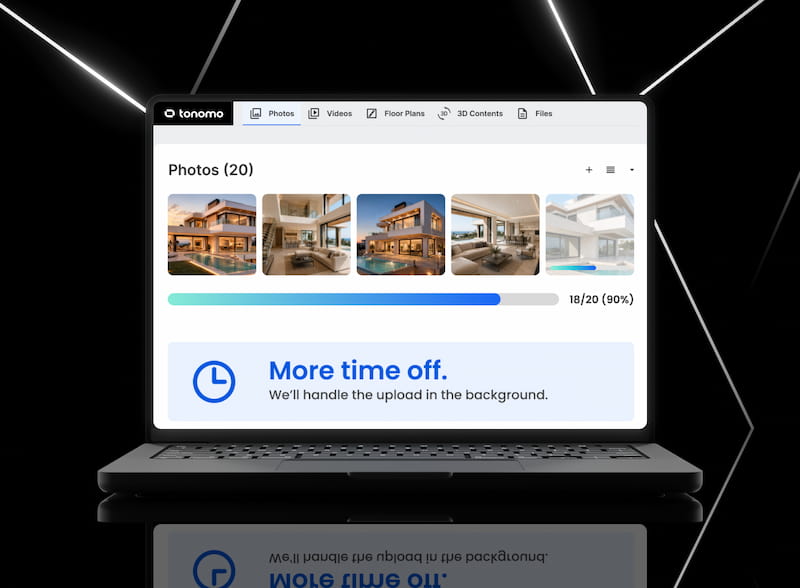
Esoft’s editing team is now built into Tonomo. Photographers upload the RAW files to the listing, and the edited photos come back to that same listing, ready to check and deliver.
Key takeaways
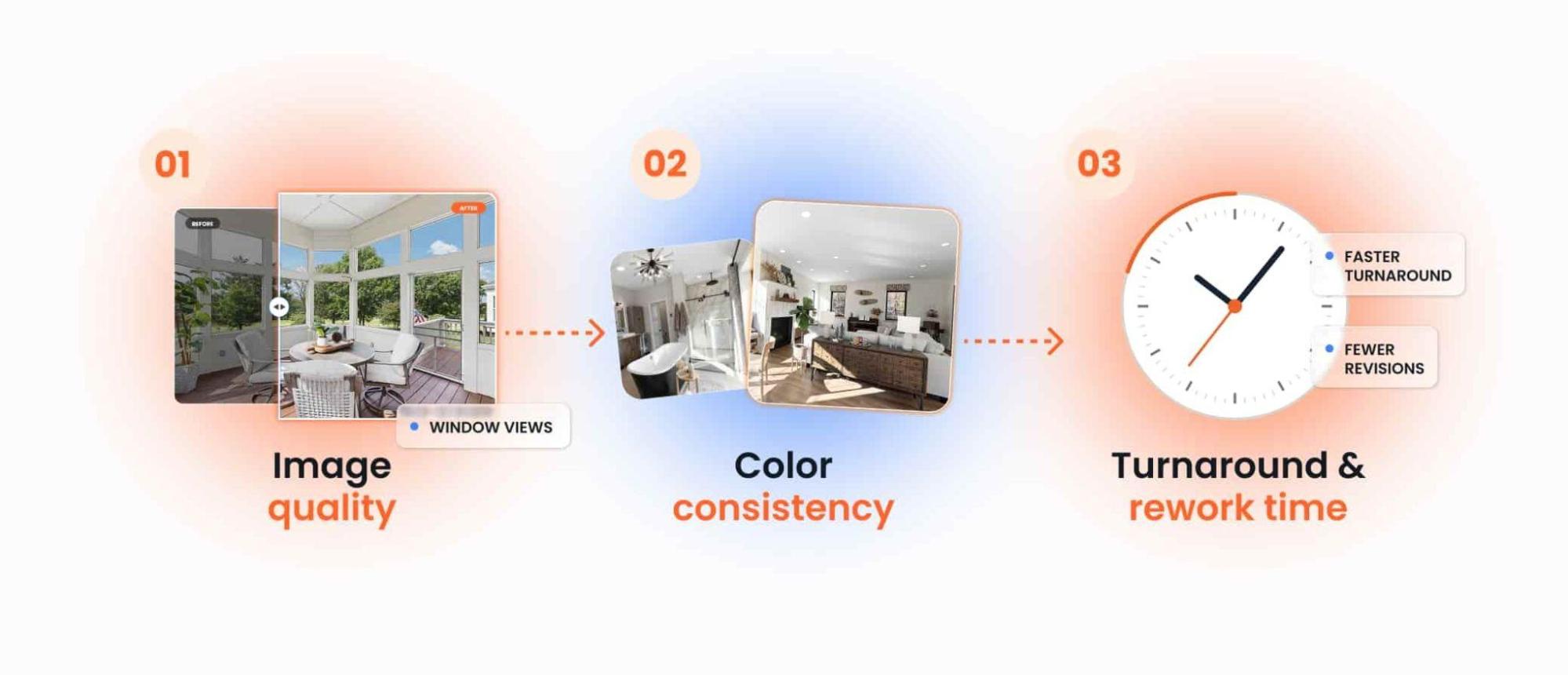
- A real estate photo editing service should be judged on the full gallery and the process behind it: consistency, turnaround, quality control, capacity and fit with the existing workflow.
- Human, manual photo editing for real estate matters for window pulls, mixed lighting, reflections and client-specific styles, while automation handles fast, repetitive corrections.
- High-volume editing depends on qualified editors, quality control, production capacity and a clear workflow, not on team size alone.
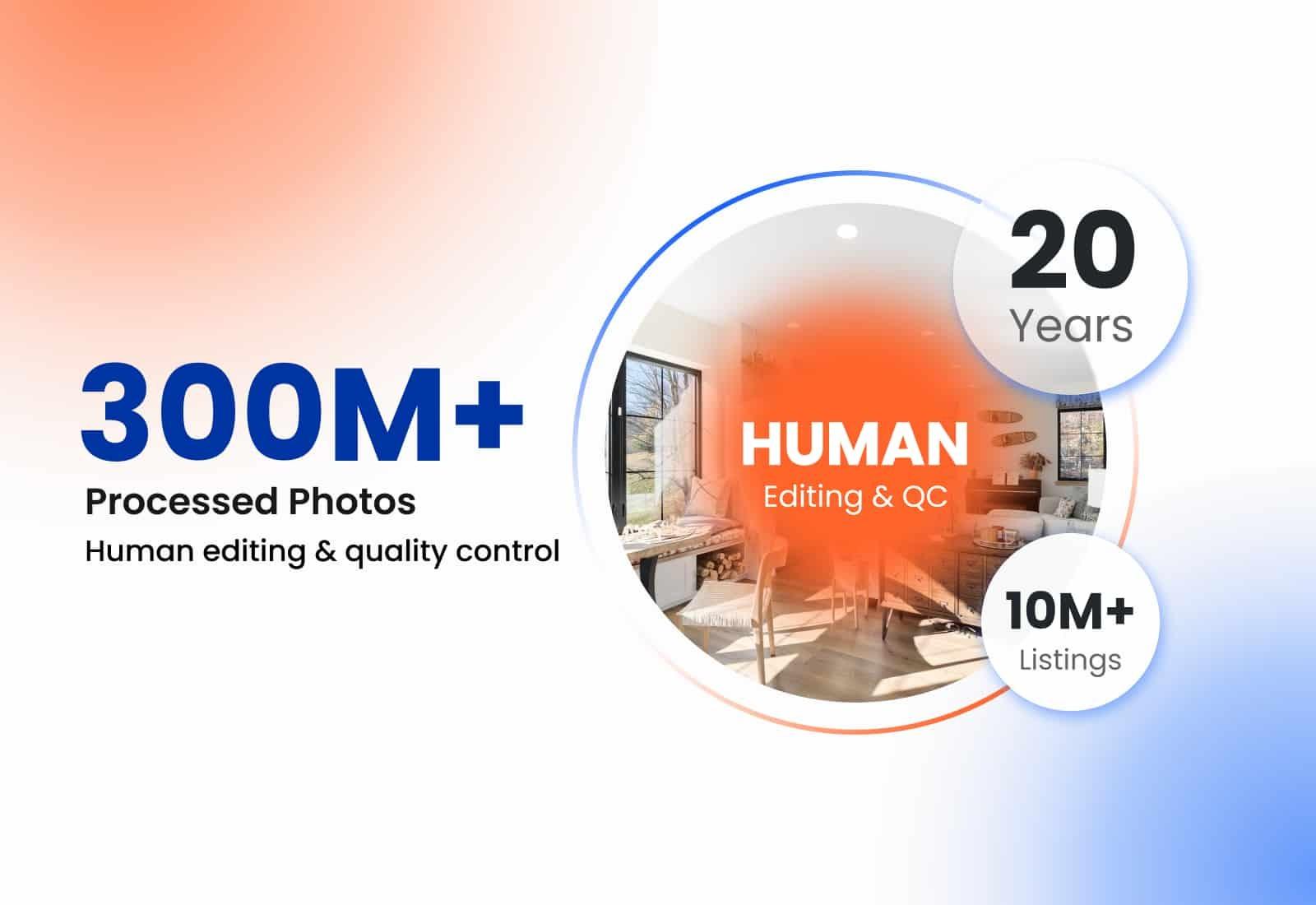
- Esoft has more than 20 years of experience in real estate media production and has processed more than 300 million images across more than 10 million listings.
- Esoft’s editing team is now built into Tonomo, so editing orders, RAW files and finished photos stay on the same listing, with no downloading and re-uploading.
What Is Real Estate Photo Editing?
Real estate photo editing is the process of turning the RAW images from a property shoot into polished, client-ready images.
Common real estate photo editing services include:
- Exposure and brightness correction
- HDR and bracket blending
- White balance and color correction
- Window pulls and exterior detail recovery
- Perspective correction and image straightening
- Sky replacement
- Twilight enhancement
- Reflection removal
- Object removal
- Sensor dust cleanup
- Lighting refinement
- Detailed image retouching
- Final quality control
The goal is to present the property true-to-life and attractively, not simply to make an image look more dramatic.
A good edit should make a room feel bright without looking artificial. Windows should show enough exterior detail without making the interior unnaturally dark. Whites should look white. Vertical lines should be straight. Colors should look natural, and the entire property gallery should feel consistent.
That is what separates professional real estate photo editing from basic photo enhancement.
What to Look for in a Real Estate Photo Editing Service
Finding a real estate photo editor is relatively easy. Finding the best photo editor for real estate, one that consistently delivers the quality, turnaround, and workflow a photographer needs, takes more consideration.
1. Real Estate-Specific Editing Experience
A qualified real estate photo editor should understand architectural lines, natural-looking interiors, window views, color accuracy, and how images represent a property.
Look at complete property galleries rather than individual portfolio highlights. A single impressive image doesn’t necessarily show how well an editor handles an entire listing.
2. Consistent Editing Quality
A real estate listing might contain 30, 50, or even 100 images.
Exposure, white balance, contrast, perspective, and overall editing style should remain consistent throughout the set.
Consistency becomes particularly important when different editors work on the same photographer’s images or when multiple photographers contribute to one media business.
3. Reliable Turnaround
Real estate photography often runs on tight delivery schedules.
An editing service needs predictable turnaround on every order, not just the occasional fast delivery.
Before committing, photographers should know the service’s normal processing time, how revisions work, and how it keeps delivery commitments during busy periods.
4. Human Quality Control
Look for a clear quality-control process that checks for problems such as unnatural colors, inconsistent exposure, distracting artifacts, incorrect perspectives, and missed retouching details.
The important question isn’t only who edits the images. It’s also how the finished work is checked.
5. Capacity for Different Volumes
An individual editor can be the right choice for a photographer with a manageable workload. But availability becomes a problem when deadlines overlap or the editor is out.
6. Ability to Follow Editing Preferences
Real estate photographers do not all want the same look.
Some prefer neutral colors. Some prefer brighter interiors. Some have specific expectations around windows, skies, grass, shadows, or contrast.
7. Support for Complex Retouching
Not every image can be handled with standard corrections. Some require more judgment, including:
- Difficult mixed lighting
- Complicated reflections
- Distracting objects
- Challenging window views
- Uneven color
- Detailed retouching
- Unusual property conditions
These situations require more than applying the same correction to every image.
8. Fits Your Real Estate Photo Editing Workflow
Editing is only one part of the workflow. If every order requires downloading files, moving them between platforms, uploading them again, tracking revisions separately, and manually organizing finished images, outsourcing can create as much administrative work as it saves.
Why Human Editing Still Matters in Real Estate Photography
AI and automated editing have made real estate photo editing much faster. They are useful for repetitive corrections and images that follow a consistent set of requirements.
However, real estate images can contain several lighting conditions in one frame. A bright exterior may sit next to a dark interior. Reflections can appear on windows and glossy surfaces. Artificial lights can create different color temperatures from the daylight outside.
The final image needs to balance all of these without looking over-processed. This is where human judgment and manual photo editing for real estate still matter. A human editor adds taste: the sense of when a room looks bright but still real, and when an edit has gone too far.
A professional real estate photo editor can make decisions around:
- Window pulls: Recovering exterior detail while keeping the interior properly exposed.
- Mixed lighting: Balancing daylight, interior lighting, and different color temperatures.
- Exposure: Bringing bright and dark areas together without flattening the image.
- Color correction: Keeping walls, ceilings, furniture, flooring, and other surfaces looking natural.
- Reflections: Removing distracting reflections while preserving realistic surfaces.
- Object removal: Cleaning up unwanted items without making the edit obvious.
- Perspective correction: Keeping architectural lines, walls, doors, and windows straight.
- Client-specific style: Following the editing preferences expected by a particular photographer or media business.
- Gallery consistency: Making sure the entire property has a consistent look rather than treating every image as an isolated edit.
These decisions require more than technical editing skills. They require an understanding of real estate photo editing as a whole: how individual adjustments affect the final image and how the finished photos will be used. The difference can be subtle. That is often the point.
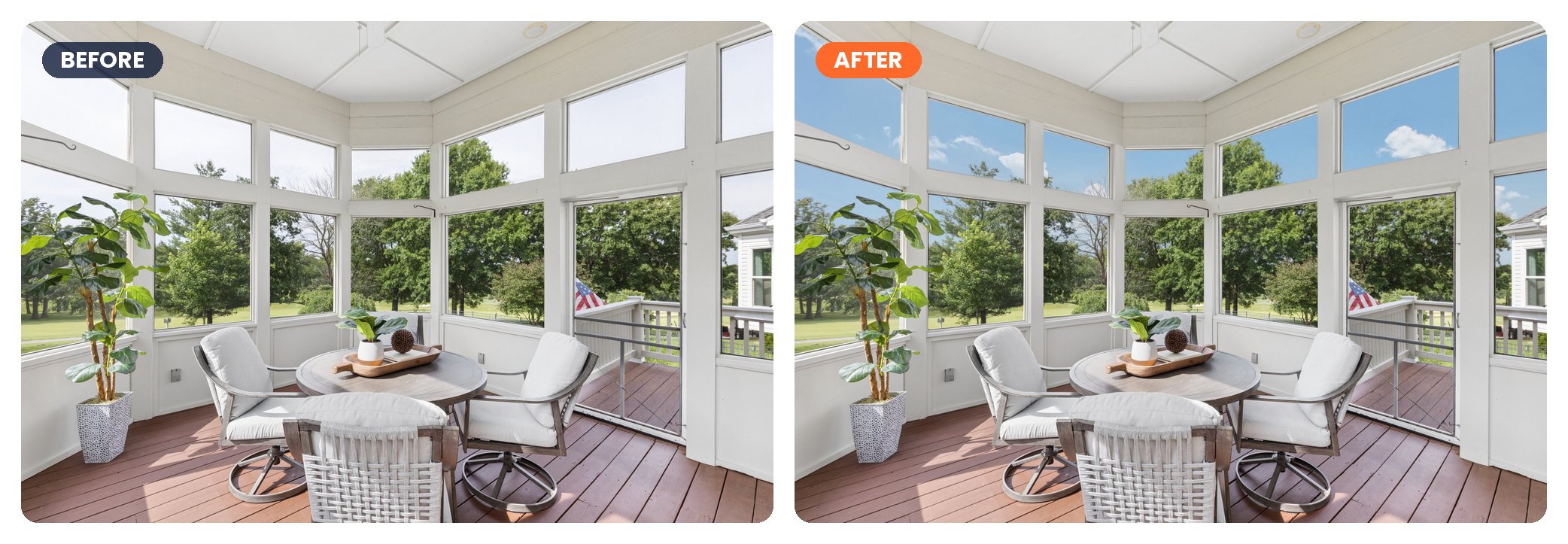
Automation is a good fit for routine, repetitive work. The creative calls, such as the look of each room and how the full gallery presents the home, still benefit from a human eye. The strongest editing workflow uses each where it fits.
How Do Real Estate Photo Editing Services Handle High Volume?
This is where editing becomes an operational question. A single editor can produce excellent work. But an editing service also needs enough capacity to maintain quality as the number of images increases. Consider what happens when several real estate photography jobs arrive at the same time:
- More RAW files need to be processed.
- More images need to be reviewed.
- More property galleries need to stay consistent.
- More deadlines need to be met.
Without enough production capacity, backlogs can build up.
A professional editing operation therefore needs more than individual editing skill. Qualified editors, quality control, production capacity, technology and a clear workflow all have to hold up as volume grows.
A larger editing team isn’t automatically a better service. What matters is how effectively the people, standards, technology, and quality-control processes work together. For studios and real estate media companies managing frequent shoots, a professional editing operation can add capacity and continuity.
Esoft: Professional Human Editing at Scale, Now in Tonomo
Esoft is one of the real estate editing services built to handle high volumes.
With more than 20 years of experience in real estate media production, Esoft combines qualified human editors, production technology, and quality-control processes. The company has processed more than 300 million images across more than 10 million listings.
Editors review every image for distractions, inconsistencies, lighting and color issues, and other details that may affect the final result. Retouching work includes:
- Reflection removal
- Sensor dust cleanup
- Object removal
- Lighting refinement
- Color balancing
- Custom retouching
Automated tools support parts of the editing process, while human editors handle adjustments that require visual judgment and attention to detail.
Esoft’s editing team is now built into Tonomo, connecting professional human editing to the real estate photography workflow.
How Esoft Works in Tonomo: Upload, Edit, Review, Deliver
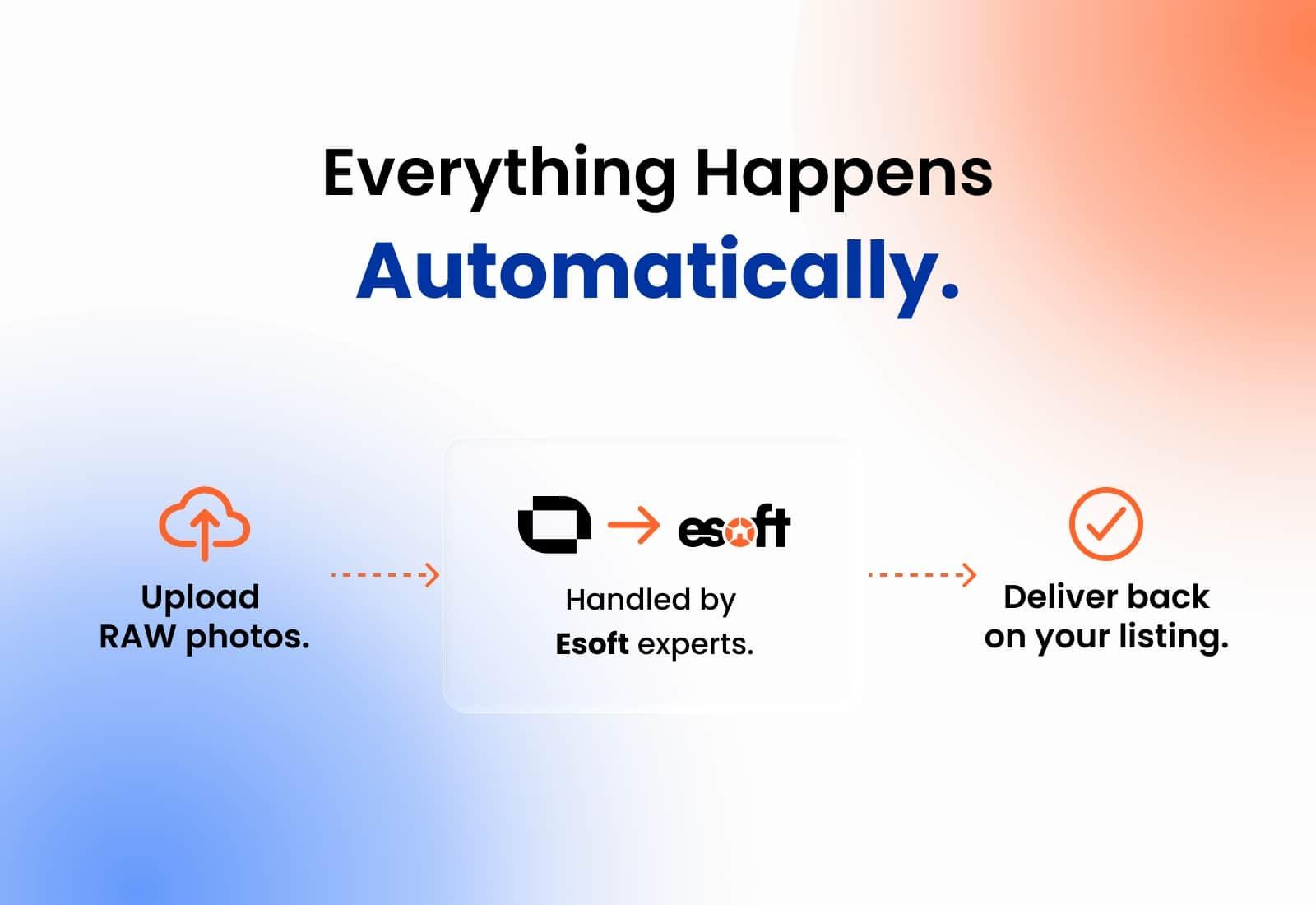
Editing orders, the RAW files, and the finished photos stay on the same listing, so photographers no longer need to manage the editing process across separate systems.
The process works as follows:
- Create an editing order in Tonomo.
- Upload the RAW photos.
- The files are automatically sent to Esoft.
- Esoft editors process and review the images.
- The edited files return to the listing in Tonomo.
- Review the images and prepare them for delivery.
Traditional workflow: Upload → Edit somewhere else → Download → Upload again → Organize → Deliver
With Esoft in Tonomo: Upload → Esoft edits → Review → Deliver
What This Means for Real Estate Media Companies with Teams
For solo real estate photographers who want a simpler editing workflow, it removes the download-and-re-upload step from every listing. For media businesses handling higher volumes, the bigger benefit is operational consistency.
When multiple photographers are out shooting, editing requests and handoffs need to follow a process everyone understands. Without one, owners can end up spending time chasing updates, figuring out who sent the files, where they were sent, and whether they were sent at all, while also fixing communication gaps.
New photographers follow the same steps from their first job. The process lives in Tonomo, not in how each person likes to work.
Read more: Deliver real estate photos without Dropbox
Conclusion
A good real estate photo editing service gets the images right: consistent galleries, natural light and color, reliable turnaround, and a real quality check before anything goes out. The goal is to make the property look true-to-life.
But the edit is only one step. For most photography businesses, the time goes into moving files around and chasing who sent what.
Esoft handles the editing. Tonomo keeps the order, the files, and the finished photos on the listing, so editing becomes one more step in the job instead of one more system to manage.
Get started with Esoft in Tonomo →
Frequently Asked Questions
What is real estate photo editing?
Real estate photo editing is the process of processing and retouching property photographs to create polished, consistent, client-ready images. It can include exposure correction, HDR blending, color correction, window pulls, perspective correction, object removal, sky replacement, and other forms of image retouching.
What does a real estate photo editor do?
A real estate photo editor processes property images and corrects issues such as exposure, color, lighting, perspective, reflections, and distracting objects. Professional editors also help maintain consistency across an entire property gallery.
Is human photo editing for real estate better than AI?
Neither approach is automatically better for every task. AI is effective for fast, repetitive corrections, while human editors can provide judgment for complex images, detailed retouching, unusual lighting, reflections, and client-specific editing preferences.
What makes the best photo editor for real estate?
The best photo editor for real estate understands property photography, keeps an entire gallery consistent, follows the photographer’s editing preferences, and checks every image before delivery. For complex images, such as mixed lighting, window pulls and reflections, an experienced human editor brings the judgment and taste those edits need.
What should photographers look for in a real estate photo editing service?
Important factors include editing quality, consistency, turnaround time, human quality control, retouching capabilities, editing capacity, and how easily the service fits into the existing photography workflow.
How do real estate photo editing services handle high-volume jobs?
High-volume editing requires more than individual editing skill. Professional services need qualified editors, quality-control processes, production technology, and enough capacity to maintain consistent quality and turnaround as the number of images increases.
What is real estate image retouching?
Real estate image retouching involves more detailed corrections beyond basic exposure and color adjustments. Examples include removing unwanted objects or reflections, cleaning sensor dust, refining lighting, correcting distracting elements, and handling specific client requests.
Can Esoft handle high-volume real estate photo editing?
Esoft operates a large human editing operation focused on real estate media. The team has processed more than 300 million images across more than 10 million listings and provides human editing and quality control.
How does Esoft work with Tonomo?
Esoft is integrated directly into Tonomo. Photographers can create an editing order and upload RAW files in Tonomo, after which the files are sent to Esoft for editing. Finished files return to the listing in Tonomo for review and delivery, eliminating the need to manually move files between systems.
Related Articles